"Breathtaking scenery and very helpful, friendly guides. I really enjoyed the experience."
Plan Your Visit
Uluru (Ayers Rock) Visitor Guide
Passes, hours, walks, tours and how many days you need.
From
$132
per person
Free cancellation
- 4.7 / 5 279+ Reviews
- About 3 hours Duration
- A$38 3-day park pass
- 348 m Height of Uluru
- Free Cancellation
Book Your Tour
Check Availability & Prices
SEIT's small-group Highlights tour collects you from your Yulara hotel before dawn, watches sunrise over Uluru with a picnic breakfast and finishes by mid-morning.
The Experience
What the Uluru Highlights Tour Covers
A first look at Uluru at sunrise with a guide, a good start to any trip.
Highlights
- Sunrise over Uluru from a viewing spot chosen by your guide
- Kuniya walk to Mutitjulu Waterhole, about 1 km return
- Creation stories of Liru and Kuniya told at the waterhole
- Drive around the base of Uluru with the story of the Mala people
- Guide talks on plants, wildlife, geology and Aboriginal culture
- Morning schedule that finishes before the heat of the day
What's Included
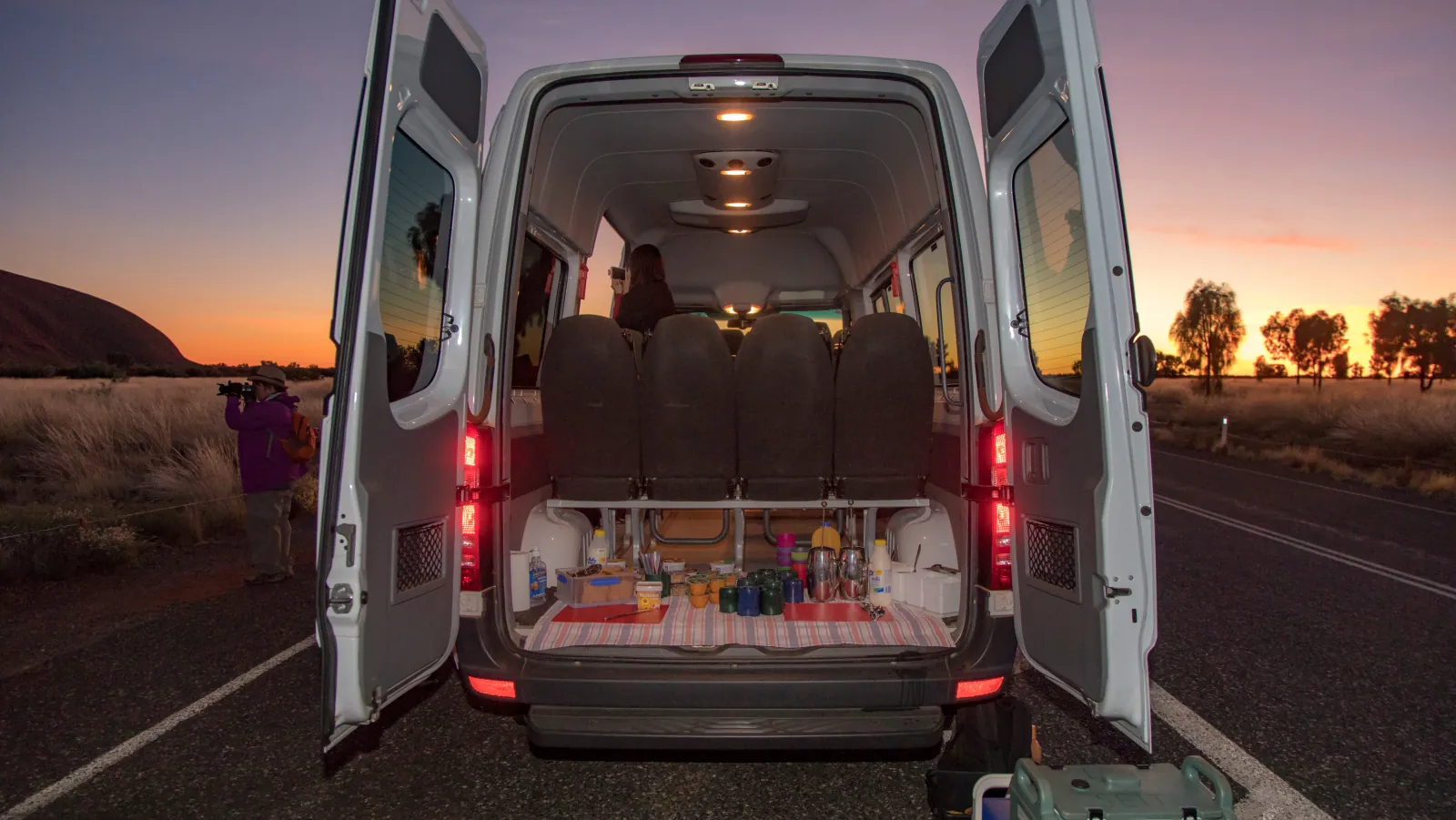
- Outback picnic breakfast with freshly brewed coffee and tea
- Pickup and drop-off at all Ayers Rock Resort hotels
- Professional driver guide
- Small-group air-conditioned vehicle, maximum 15 participants
- Optional audio guide in French, German, Spanish, Italian, Russian or Mandarin
- Car seat for infants (covered by the infant price)
How a Morning at Uluru Works
From the hotel pickup to the drop-off back at the resort.
Book your morning
Pick a date in the booking box. Free cancellation applies up to 24 hours before departure.
Pickup before dawn
The guide collects you from your Ayers Rock Resort accommodation and drives into the national park in the dark.
Sunrise and breakfast
Watch the first light reach the rock, hear the Creation stories of Kuniya and Liru, then eat an outback picnic breakfast.
Mutitjulu Waterhole and the base
A short walk to Mutitjulu Waterhole and a drive around the base of Uluru, then back to the resort.
Photo Gallery
Uluru and the Red Centre
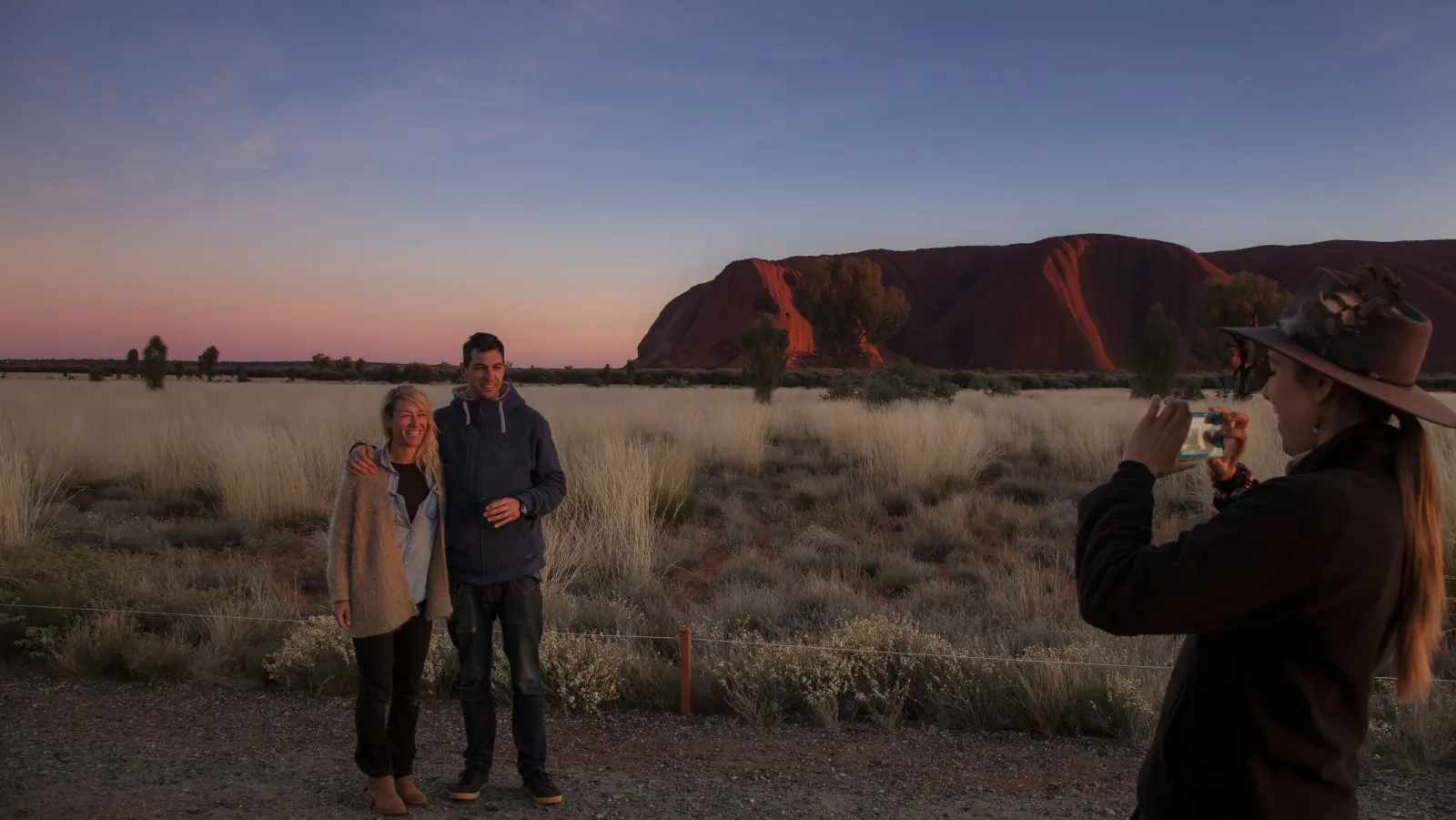
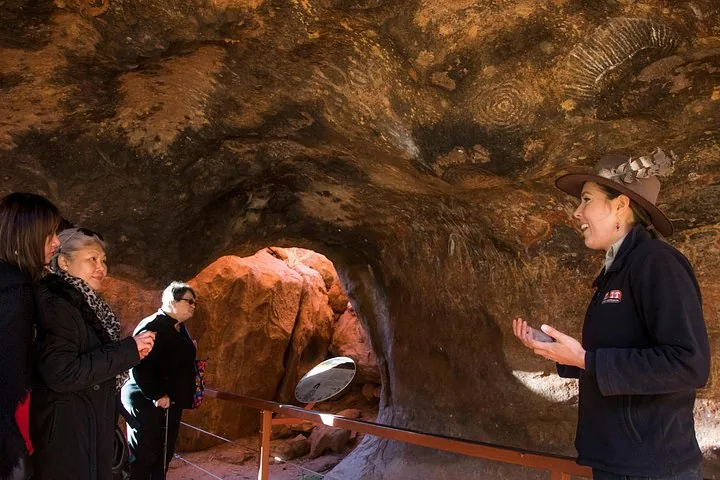
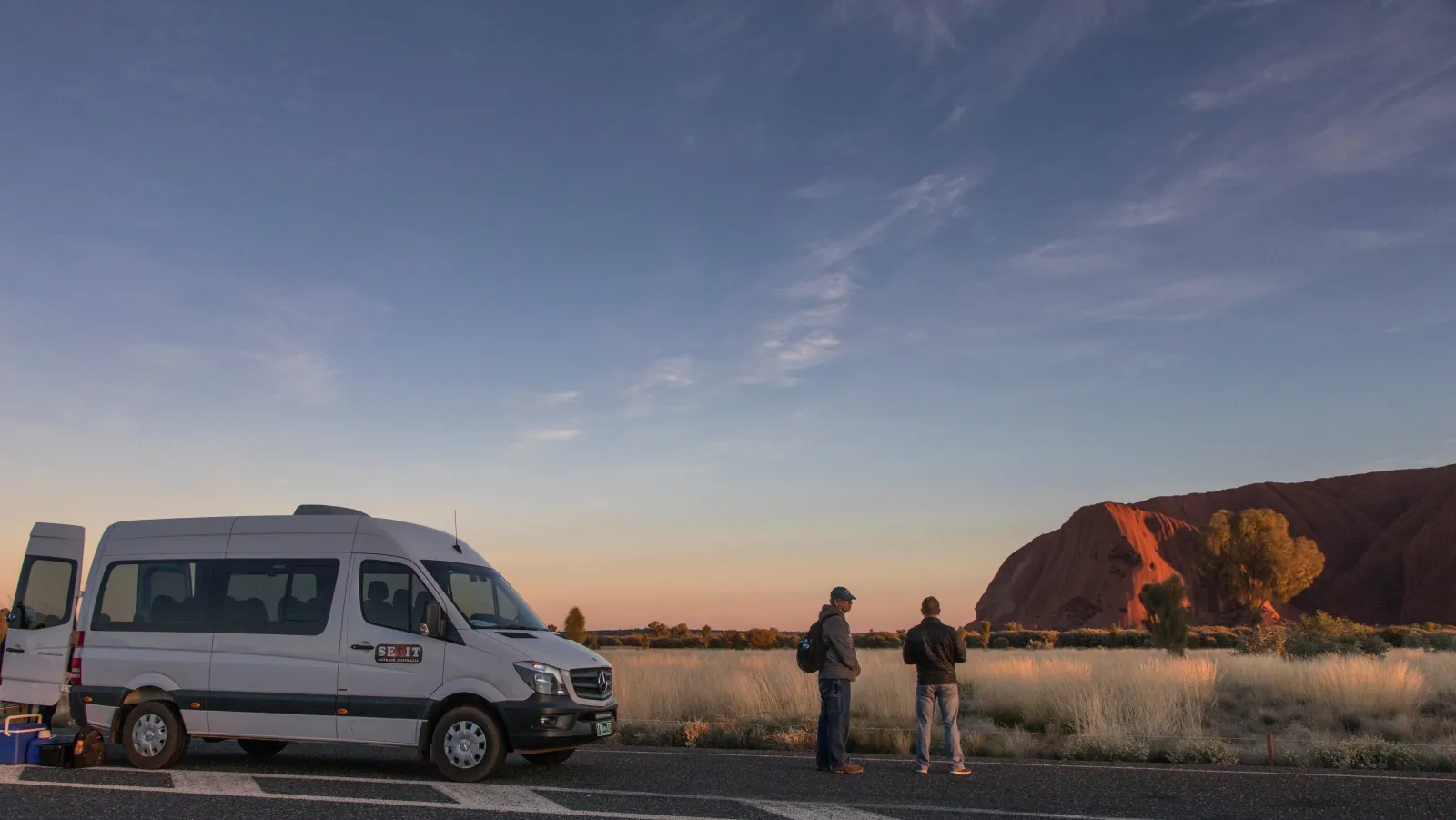
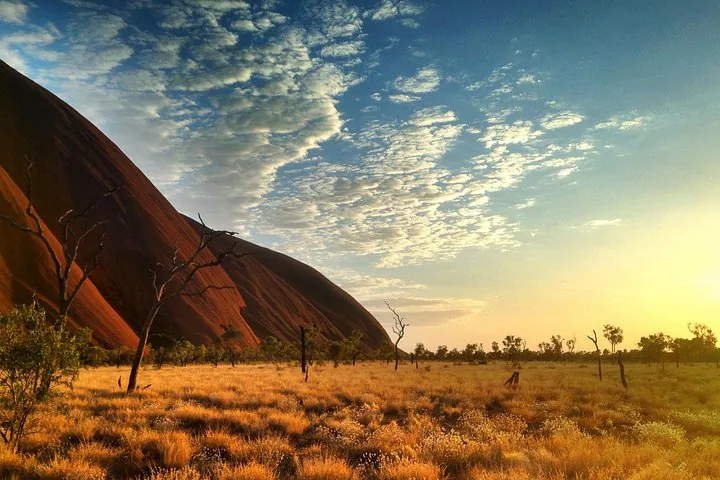
The rock at sunrise, the waterhole and the desert around it.
Three Ways to See Uluru Without Hiring a Car
A small-group sunrise tour, the Hop On Hop Off pass and a 3-day camping trip. Platform prices in USD from the live listings, October 2026.
| Feature | FEATURED Uluru Highlights Small-Group Sunrise | Uluru & Kata Tjuta Hop On Hop Off Pass | Uluru, Kata Tjuta & Kings Canyon Camping Tour |
|---|---|---|---|
| Starting price | From $132 per person | From $98 per person | From $555 per person |
| Rating | 4.7 (279 reviews) | 4.5 (160 reviews) | 4.8 (462 reviews) |
| Duration | About 3 hours | 1, 2 or 3-day pass | 3 to 4 days, 2 to 3 nights |
| Pickup | ✓ All Ayers Rock Resort hotels | ✓ Resort hotels and campground | ✓ Alice Springs hotels or Yulara / Ayers Rock Airport |
| Included | Driver guide, outback picnic breakfast, tea and coffee | Unlimited Uluru transfers, one Kata Tjuta return on 1 and 2-day passes | Swag camping, all meals, guided walks, national park fees |
| Park pass | ✗ Buy separately (A$38 adults) | ✗ Buy separately (A$38 adults) | ✓ National park entry fees included |
| Free cancellation | ✓ Up to 24 hours before | ✓ Per listing | ✓ Per listing |
| Best for | A first morning at the rock | Independent days without a car | Uluru, Kata Tjuta and Kings Canyon in one trip |
| Check Availability | See on GetYourGuide | See on GetYourGuide |
Plan Around Your Days
Tours to Build Your Uluru Trip Around
A coach sunrise, a shuttle pass, light art, a flight and a three-day camping trip. Each card opens our review.
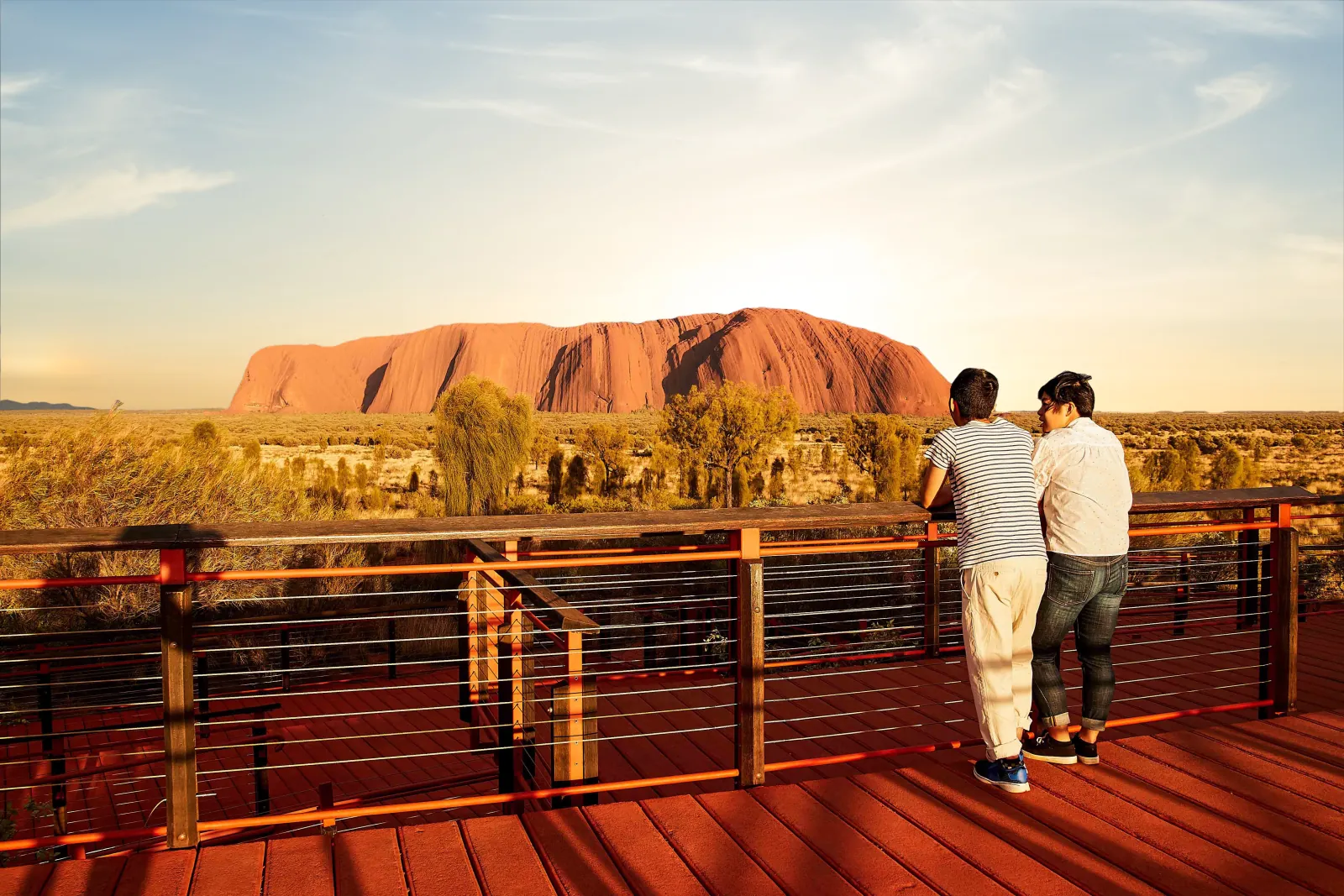 SUNRISE + KATA TJUTA
Yulara: Uluru Sunrise and Kata Tjuta Day Trip by Bus
A half-day AAT Kings coach tour that starts with sunrise over Uluru at Talinguru Nyakunytjaku, then drives to Kata Tjuta for a viewing stop and the Walpa Gorge walk. It suits first-time visitors who want both landmarks in one morning without driving.
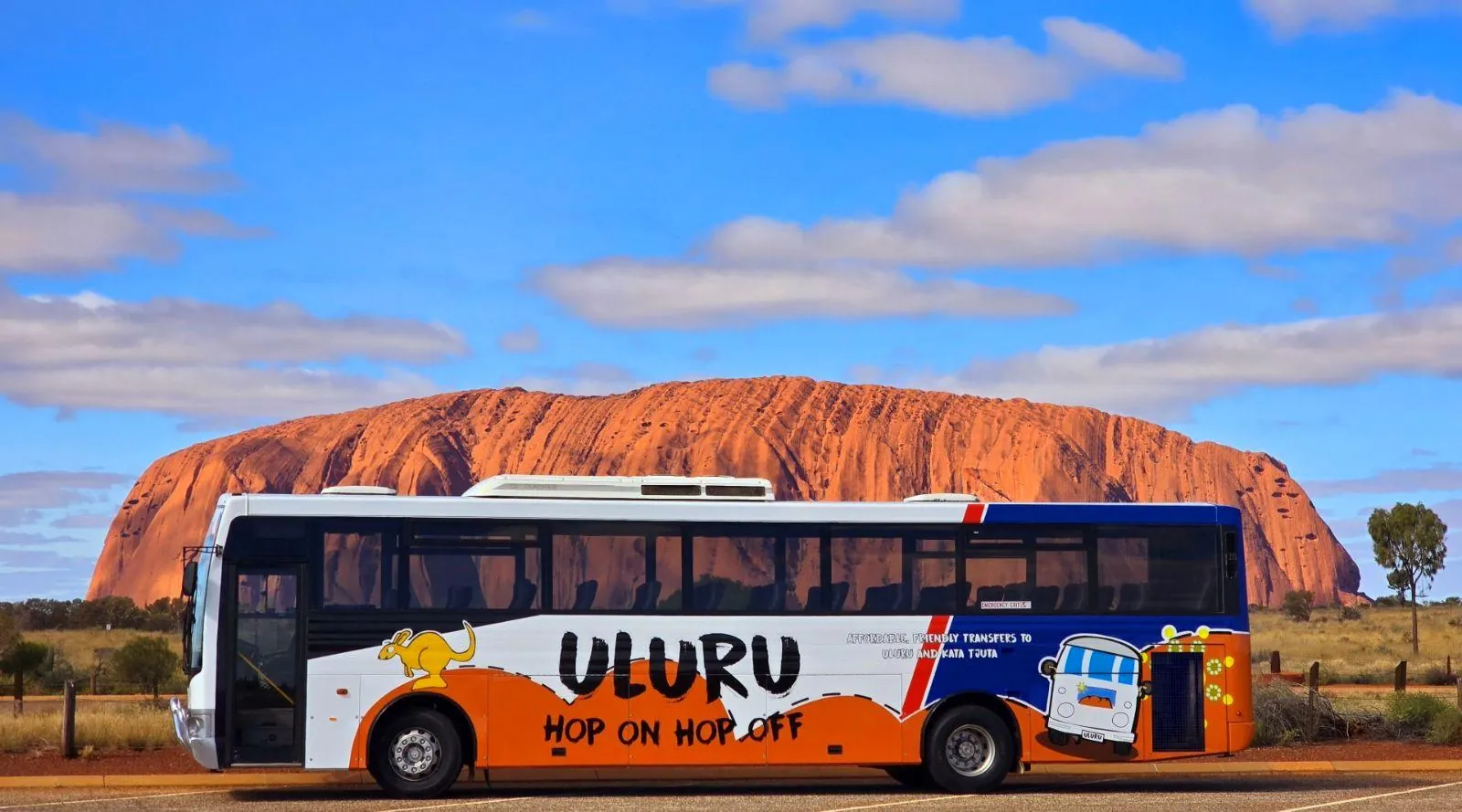 NO CAR NEEDED
Uluru & Kata Tjuta: Hop on Hop Off Pass
A 1, 2 or 3-day bus pass that runs you between the Ayers Rock Resort hotels and Uluru as often as you like between sunrise and sunset, plus return trips to Kata Tjuta. It suits independent travelers and families without a car who want to plan their own days.
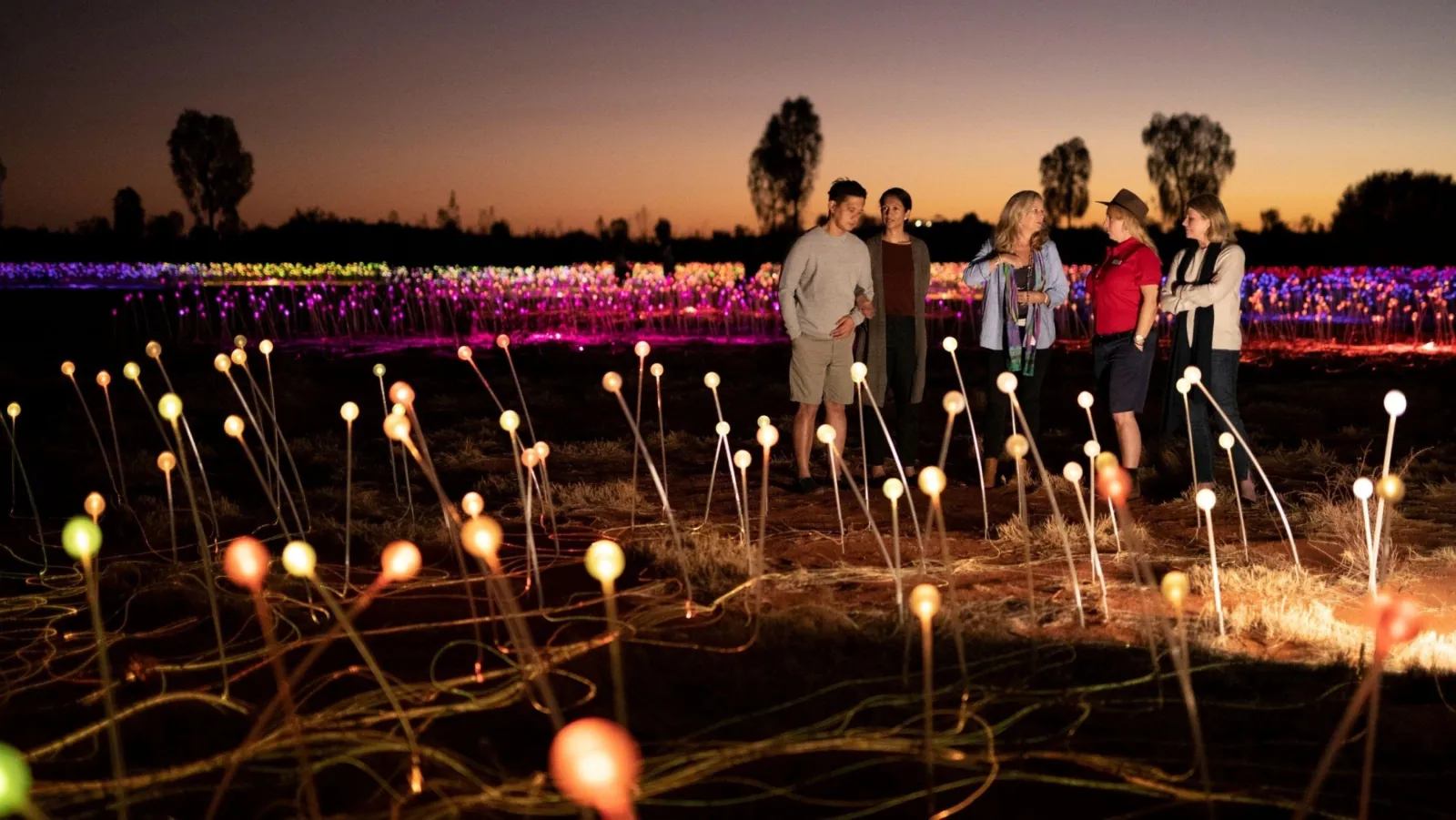 FIELD OF LIGHT
Uluru: Field of Light Sunrise Tour with Hot Drinks
An AAT Kings early-morning tour that walks you through the Field of Light in the dark, then watches sunrise over Uluru from a dune-top viewing area with tea, coffee or hot chocolate. It suits early risers who want to see the installation and a sunrise in one short outing.
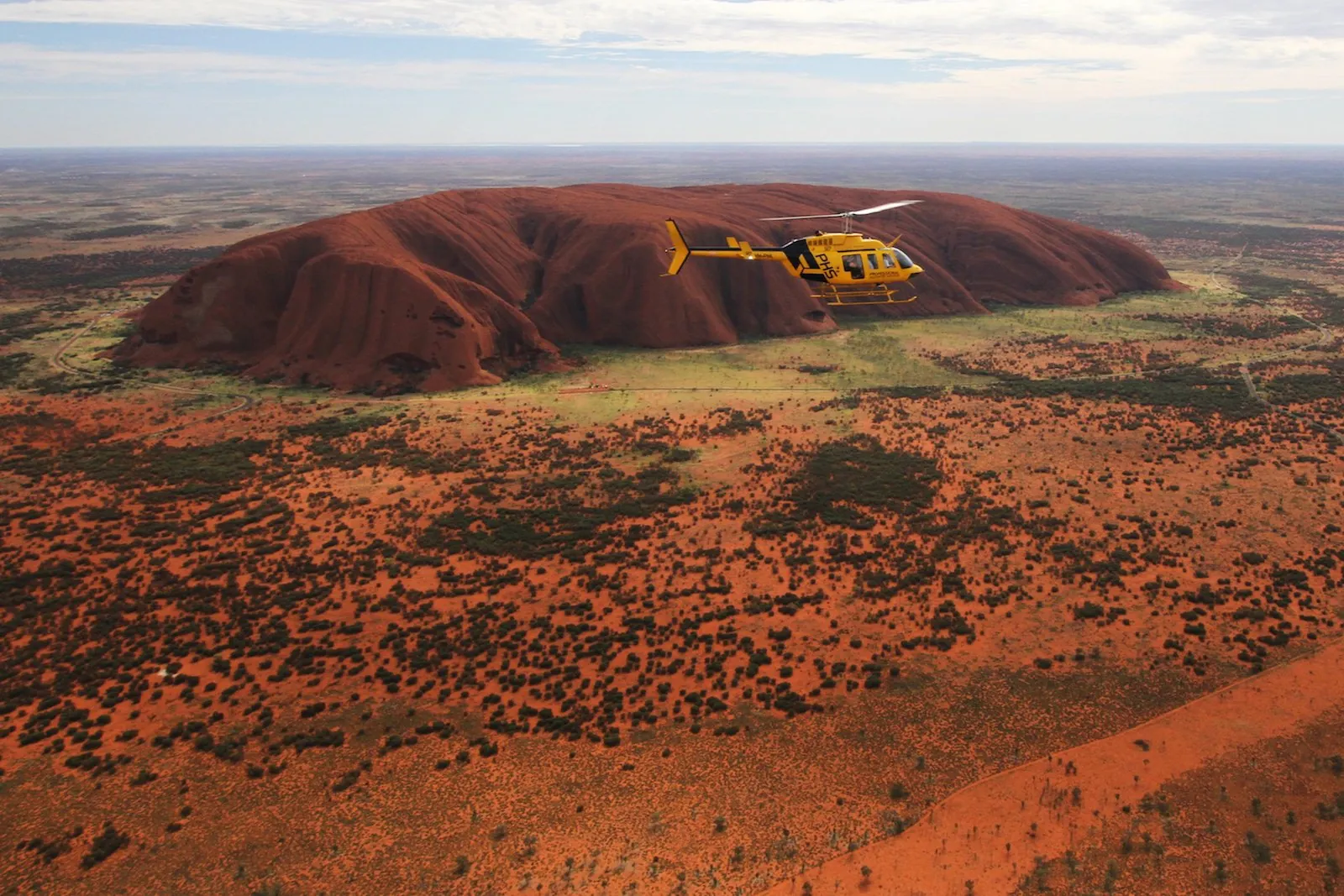 HELICOPTER
Uluru 15-Minute Helicopter Experience
A short 15-minute helicopter flight focused on Uluru, with return coach transfers from your hotel to Ayers Rock Airport. It suits travelers who want Uluru from the air at the lowest price of the three helicopter flights on this site.
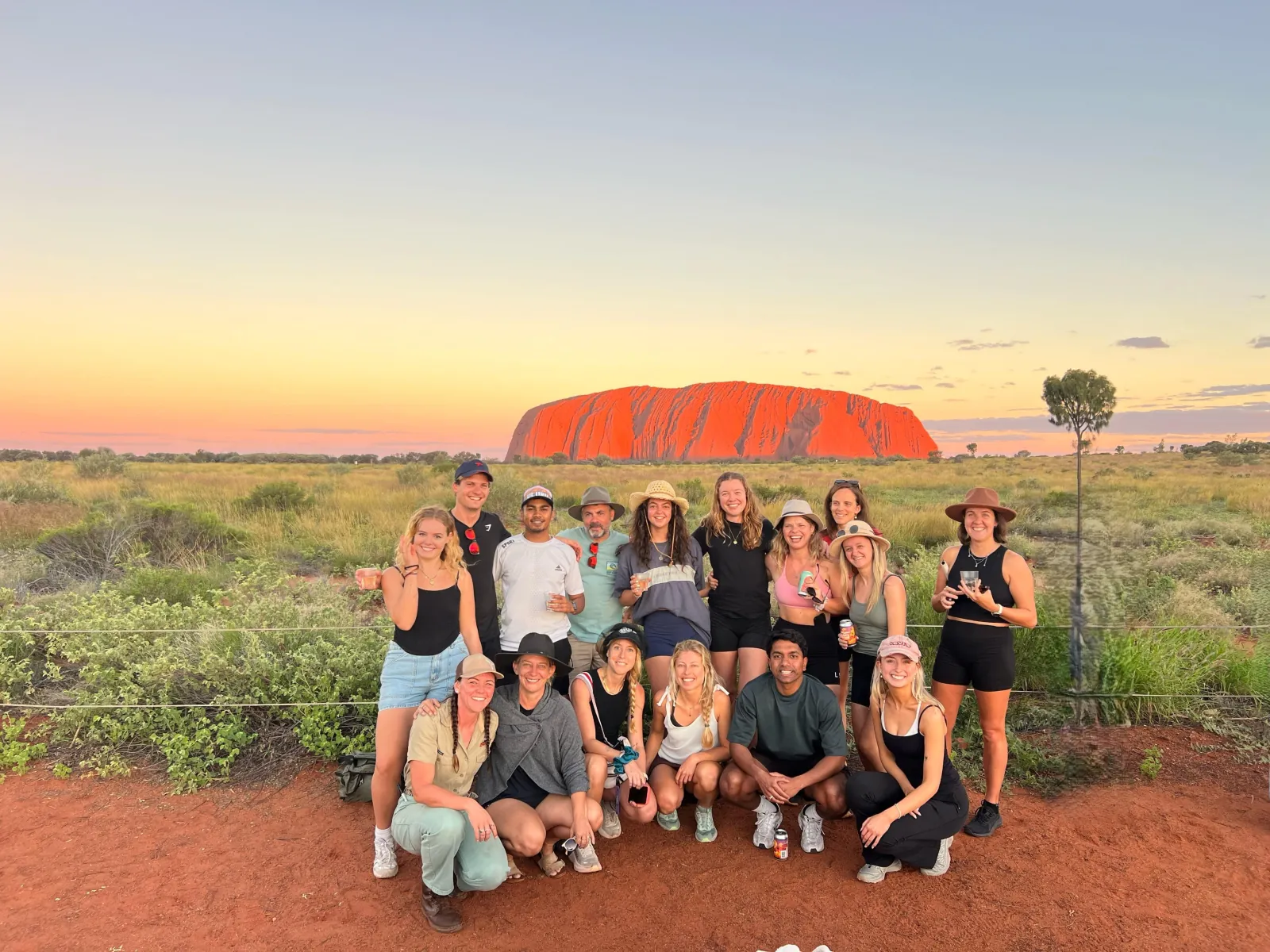 3-DAY CAMPING
Uluru, Kata Tjuta & Kings Canyon Camping Tour
A three-day camping tour with Adventure Tours Australia covering Kata Tjuta, Uluru at sunset and sunrise, the full Uluru base walk and the Kings Canyon Rim Walk, sleeping in swags by the campfire. It starts and ends in Alice Springs or Yulara and suits fit, social travelers on a budget.
Visitor Guide
Visiting Uluru: Passes, Hours, Walks and Tours
Everything to settle before you go, with links to the detailed guides.
Plan on two to three days at Uluru: one sunrise and one sunset at the rock, the base walk, Kata Tjuta, the Cultural Centre and one evening experience. Everyone needs a park pass (A$38 for adults, valid 3 days), everyone sleeps at Yulara, and the climb has been closed since 2019.
Rising sheer from the flat red sand of the Northern Territory, the rock the world knows as Ayers Rock is the heart of Anangu culture and the centrepiece of a dual World Heritage national park. This guide covers what you need to settle before you go, and links to a deeper page wherever you want more detail.
Uluru quick facts
| Fact | Detail |
|---|---|
| Official name | Uluru / Ayers Rock (dual-named) |
| Location | Uluru-Kata Tjuta National Park, southern Northern Territory |
| Height | 348 m above the plain (863 m above sea level) |
| Circumference | 9.4 km (the base walk is 10.6 km) |
| Age | Began forming about 550 million years ago |
| Rock type | Arkose (coarse-grained sandstone) |
| Nearest base | Yulara / Ayers Rock Resort, about 20 minutes’ drive |
| Distance from Alice Springs | 465 km by road, about 5.5 hours |
| Kata Tjuta (The Olgas) | About 25 km west of Uluru, in the same park |
| Traditional Owners | Anangu (Pitjantjatjara and Yankunytjatjara peoples) |
| World Heritage | Listed 1987 (natural values) and 1994 (cultural landscape) |
| Park pass | A$38 per adult for 3 days; under-18s free |
| Climbing | Permanently closed since 26 October 2019 |
Uluru or Ayers Rock?
Both names are correct. Uluru is the Anangu name, used for this place for tens of thousands of years. Ayers Rock was given in 1873 by the explorer William Gosse, the first European to see the rock, after Sir Henry Ayers, then Chief Secretary of South Australia. On 15 December 1993 it became the Northern Territory’s first dual-named feature, “Ayers Rock / Uluru”, and on 6 November 2002 the order was reversed to “Uluru / Ayers Rock” at the request of the regional tourism association in Alice Springs.
Parks Australia and most Australians say Uluru, and so does this site. Plenty of international travelers still search for “Australia Ayers Rock”, and it is the same place. Kata Tjuta was likewise long known as The Olgas. Our Kata Tjuta tours page covers it.
Anangu culture and visiting respectfully
To Anangu, Uluru is a living cultural landscape shaped by Tjukurpa, the foundation of Anangu law, knowledge and religion. Tjukurpa explains how ancestral beings made the land, and the marks they left are still visible around the base: in caves, waterholes and the textures of the rock itself.
Handback and joint management
On 26 October 1985 the title deeds to Uluru-Kata Tjuta were handed back to Anangu in an event known as Handback. Anangu immediately leased the land back to the Australian Government for 99 years. The park is now managed jointly by Anangu and Parks Australia through a Board of Management with an Anangu majority. The 40th anniversary of Handback was celebrated in October 2025.
The climb closure
For decades Anangu asked visitors not to climb Uluru, because the climb follows a sacred ancestral route and people died or were injured on it. On 1 November 2017 the Board of Management voted unanimously to close the climb, and it closed permanently on 26 October 2019, the anniversary of Handback. You are not missing anything, since the walk around the base shows you far more of the rock.
How to be a respectful visitor
- Photography: some parts of Uluru and Kata Tjuta are culturally sensitive, and signs mark them. Anangu ask that you do not photograph or film those places, and the north-east face of Uluru in particular. Shoot it near sunset, when shadows hide the sacred sites, or frame them out. At the Kata Tjuta viewing areas, keep several domes in the shot instead of zooming in on single features.
- Drones are banned throughout the park under federal law, and penalties apply.
- Stay on marked tracks, keep off rocks and boulders, and never enter restricted areas.
- Ask before you photograph Anangu people. A friendly “palya” (hello, thank you, goodbye) goes a long way.
- Private, non-commercial photography needs no permit. Commercial shoots do.
- The park or the Cultural Centre sometimes closes, fully or partly, for Sorry Business (funerals and mourning). That happened in June and August 2026, so check park alerts before you travel and leave some slack in your plans.
Park passes and opening hours
How much does it cost to visit Uluru?
Every visitor needs an Uluru-Kata Tjuta National Park pass. These are Parks Australia’s prices in October 2026:
| Pass | Price | Notes |
|---|---|---|
| Adult (18+), 3 days | A$38 | Valid for 3 consecutive days |
| Adult (18+), annual | A$50 | Worth it if you return within 12 months |
| Under 18 | Free | None |
| NT resident vehicle, annual | A$109 | NT-registered private vehicle; driver and passengers |
Buy online from Parks Australia before you arrive, then print the pass or save the QR code to your phone (iPhone users can add it to Apple Wallet) and scan it in the left-hand lane at the entry station. If you cannot buy online, you can buy at the entry station on the way in. The pass covers Uluru, Kata Tjuta and the Cultural Centre, and is not valid at Kakadu or other Northern Territory parks.
The money goes back into the park, and a share goes to the Anangu Traditional Owners. Many tours include the pass and many do not, so check the listing before you book. Our park pass and opening hours page has the rest.
Some third-party sites still mention family passes. Parks Australia’s current price table lists only adult, annual and NT-vehicle passes, because under-18s are free.
Park opening hours by month
The park is open every day of the year but closes overnight, and rangers expect you to be out by closing time.
| Month | Opening hours |
|---|---|
| December to February | 5.00 am to 9.00 pm |
| March | 5.30 am to 8.30 pm |
| April | 5.30 am to 8.00 pm |
| May | 6.00 am to 7.30 pm |
| June and July | 6.30 am to 7.30 pm |
| August | 6.00 am to 7.30 pm |
| September | 5.30 am to 7.30 pm |
| October | 5.00 am to 8.00 pm |
| November | 5.00 am to 8.30 pm |
The Uluru-Kata Tjuta Cultural Centre is open daily from 7.00 am to 5.45 pm.
Getting to Uluru
Uluru is remote, roughly in the middle of Australia, but it is easier to reach than most people expect. The full route-by-route detail is on how to get to Uluru.
Flying to Ayers Rock Airport
Ayers Rock Airport (AYQ), also called Connellan Airport, is about 10 minutes from Ayers Rock Resort, and complimentary resort shuttles meet scheduled flights. As of October 2026:
- Sydney: direct with Qantas and Jetstar, around 3 to 3.5 hours.
- Melbourne: direct with Jetstar.
- Cairns: direct with QantasLink, which Qantas lists as a seasonal service.
- Brisbane, Adelaide, Perth and Darwin: generally with a connection through Sydney, Cairns or Alice Springs.
Airlines are changing this map. Virgin Australia cut Melbourne to Uluru from three to two weekly flights on 20 August 2026, and has announced it will end Brisbane to Uluru on 24 October 2026 and Melbourne to Uluru on 25 October 2026 for the time being, citing jet fuel costs. That leaves the Qantas Group (Qantas, QantasLink, Jetstar) as the main carrier, so check the airlines’ sites for current routes before you book anything else.
Driving from Alice Springs
Many travelers fly into Alice Springs and then drive or join a tour. Take the Stuart Highway south about 200 km to Erldunda Roadhouse, then turn west onto the sealed Lasseter Highway to Yulara. Allow about 5.5 hours for the 465 km. Fuel is sold at Stuarts Well, Erldunda, Curtin Springs (the last stop before Yulara) and at the resort. Avoid driving at dawn, dusk or night because of cattle, camels and kangaroos. A 2WD hire car is fine on this route. Our Uluru tours from Alice Springs page covers the tour options, and Kings Canyon tours from Uluru shows how to add Watarrka National Park as a loop.
Where to stay: Yulara and Ayers Rock Resort
There is no accommodation inside the national park for independent travelers. Everyone stays at Yulara, the township that is home to Ayers Rock Resort, operated by Voyages Indigenous Tourism Australia. It covers every budget: Ayers Rock Campground, Outback Hotel & Lodge, Emu Walk Apartments, The Lost Camel, Desert Gardens Hotel and Sails in the Desert, plus the luxury Longitude 131° lodge. Curtin Springs cattle station, about 86 km east of Yulara, has budget camping. Book early for the cooler months and school holidays, and see where to stay at Uluru for the areas compared.
Best time to visit Uluru
Uluru works all year, but the season sets the pace of your days. The figures below are long-term averages from the Bureau of Meteorology’s Yulara Airport station.
| Season | Months | Average high / low (°C) | What to expect |
|---|---|---|---|
| Summer | December to February | about 37 to 39 / 21 to 23 | Very hot, frequent heat-related trail closures, the most flies, occasional storms and waterfalls on the rock; quieter and cheaper |
| Autumn | March to May | about 35 falling to 24 / 20 falling to 9 | Warm and cooling through the season; good walking by May |
| Winter | June to August | about 20 to 24 / 4 to 6 | Sunny, mild days and cold nights that can drop below 0°C; peak season and peak prices |
| Spring | September to November | about 29 rising to 35 / 11 rising to 19 | Pleasant early, hot by November; wildflowers after rain |
May to September is the most comfortable time to walk, and also the busiest. Late April to May and September give the best balance of weather and crowds. In summer, walk at dawn and keep the middle of the day for the Cultural Centre and the pool. The best time to visit Uluru page goes month by month.
Heat closures
Parks Australia advises finishing walks by 11.00 am in hot weather. Three rules apply:
- Valley of the Winds at Kata Tjuta closes beyond Karu Lookout from 11 am when the forecast or actual temperature is 36°C or above.
- The north-east section of the Uluru base walk closes from 11 am at 40°C or above.
- The Lungkata walk closes from 2 pm at 40°C or above.
Flies
Bush flies are most persistent from spring to autumn. A fly net for your hat costs a few dollars at Yulara and makes a big difference.
Uluru highlights
These are the essentials. The longer list is on things to do in Uluru.
Uluru-Kata Tjuta Cultural Centre
Start here. Built in consultation with Anangu, the Cultural Centre explains Tjukurpa, joint management and the park’s ecology, and has Anangu art and the Ininti Cafe. The Tjukurpa Tunnel is the recommended first stop. It is free with your park pass.
Uluru base walk (10.6 km)
The flat 10.6 km loop around Uluru takes about 3.5 hours and shows you caves, rock art, waterholes and constantly changing textures. You can walk all of it or only sections, with water and toilets at the car parks. In 2026, sections around the Mala and Lungkata walks were closed in stages for repairs after heavy February and March rain, with detours provided, so check track status when you arrive. The Uluru base walk page has the distances and sections.
Mala walk and the free ranger-guided walk
The short Mala walk leads to Kantju Gorge. The free ranger-guided Mala walk starts at the Mala car park at 8.00 am from October to April and 10.00 am from May to September, and lasts about 1.5 hours. It is one of the best free experiences in Australia.
Kuniya walk and Mutitjulu Waterhole
This gentle 1 km return stroll from the Kuniya car park ends at Mutitjulu Waterhole, home of Wanampi, an ancestral water snake. It tells the story of Kuniya (the woma python woman) and Liru (the venomous snake man). After rain, waterfalls pour down the rock here.
Sunrise at Talinguru Nyakunytjaku
The purpose-built Talinguru Nyakunytjaku viewing area looks across to Uluru with Kata Tjuta on the horizon, and has shade structures and displays. Arrive 30 to 45 minutes before sunrise.
Sunset at the Uluru viewing areas
Watching the rock turn from orange to crimson from the car and coach sunset viewing areas is a rite of passage. Bring a picnic. The viewing areas are compared on Uluru sunrise tours and Uluru sunset tours.
Kata Tjuta: Valley of the Winds and Walpa Gorge
For many visitors Kata Tjuta’s 36 domes are as memorable as Uluru. The Valley of the Winds circuit (7.4 km, 3 to 4 hours, steep and rocky) is the park’s most spectacular hike, and you can turn back at Karu Lookout (2.2 km return) if you are short of time or it is hot. The shorter Walpa Gorge walk follows a sheltered gorge between two domes. Details are in Valley of the Winds vs Walpa Gorge and on our Kata Tjuta tours page.
Field of Light
Bruce Munro’s Field of Light, 50,000 solar-powered glowing stems spread over an area the size of seven football fields, reaches its 10th year in 2026. It opened in April 2016 as a temporary exhibition, has drawn more than 750,000 visitors, and in March 2026 Voyages confirmed it will stay until at least the end of 2029. General admission is from A$50 per adult and A$39 per child (Ayers Rock Resort, travel from 1 April 2026 to 31 March 2027). To walk it at first light, the Field of Light sunrise tour with hot drinks is from $80 and rated 4.6 from 678 reviews. More on Field of Light tours.
Sounds of Silence and outdoor dining
Sounds of Silence is a member of the Australian Tourism Hall of Fame. It serves canapes and sparkling wine at sunset on a dune, then a bush tucker-inspired buffet under the stars with a star talk, from A$295 per adult (2026-27). Other options are the Field of Light Uluru Dinner (from A$360), Tali Wiru fine dining and the Wintjiri Wiru sunset dinner with a drone and light show. These are booked with Ayers Rock Resort. For a cheaper night out, the Australian BBQ dinner under the stars is from $153, rated 4.5 from 83 reviews, and our dinner under the stars page compares the options.
Helicopter and scenic flights
Seeing Uluru and Kata Tjuta together from the air shows the scale of the landscape. Short helicopter and fixed-wing flights leave from Yulara. The 15-minute Uluru helicopter flight is from $161 and rated 4.9 from 670 reviews, and the 25-minute Uluru and Kata Tjuta helicopter flight is from $258, rated 4.8 from 616 reviews. See Uluru helicopter tours for the plane flights too.
Camel tours
Sunrise or sunset camel rides through the dunes near Yulara suit families. They are booked with the operator, and the price is listed on things to do in Uluru.
Cycling around Uluru
Hire a bike from Outback Cycling and ride the base track in about 3 hours. A bike-plus-transfer package with Ayers Rock Resort is from A$129 per adult and runs from 1 March to 30 November, with the park pass extra. Bikes are not hired out on very hot days.
New in 2026: the Uluru-Kata Tjuta Signature Walk
Launched in April 2026, this 5-day, 54 km guided walk from Kata Tjuta to Uluru was developed with Anangu and is run by the Tasmanian Walking Company. It is the only way to stay overnight inside the park. It runs in the cooler months, from A$5,395 per person, and a 4-day Lodge Walk is from A$3,995.
Ways to see Uluru
The best way to see Uluru depends on your budget, confidence and time.
| Option | Best for | Pros | Cons |
|---|---|---|---|
| Self-drive (hire car from Yulara or Alice Springs) | Independent travelers, families, photographers | Total flexibility, sunrise and sunset on your own terms, cheapest for groups | You manage the heat, timing and park hours, and hire cars sell out |
| Guided tours from Yulara | First-timers, culture lovers | Expert storytelling, pass sometimes included | Fixed timings, and costs add up |
| Hop On Hop Off shuttle | Non-drivers on a budget | Unlimited Uluru trips, with Kata Tjuta transfers | Set timetable, park pass extra |
| Multi-day tours from Alice Springs | Backpackers, time-poor travelers | Uluru, Kata Tjuta and Kings Canyon in one trip, camping or lodges | Long driving days and group pace |
The Uluru and Kata Tjuta Hop On Hop Off pass is from $98 and rated 4.5 from 160 reviews. For 2026-27 the operator lists an Uluru return at A$54, a 1-day pass at A$140, a 2-day pass at A$180 and a 3-day pass at A$230 for adults, with a separate Kata Tjuta sunrise or sunset return at A$110. Our Uluru without a car page covers the rest.
The main operators, as checked in October 2026:
- AAT Kings: coach day tours from Yulara, plus 2 to 4-day short breaks from Alice Springs that include the park pass. The sunrise and Kata Tjuta half day is from $130, rated 4.6 from 605 reviews.
- SEIT Outback Australia: small-group tours from Ayers Rock Resort, such as the Uluru Highlights sunrise tour from A$189. The park pass is not included. The Highlights tour with picnic breakfast is from $132, rated 4.7 from 279 reviews.
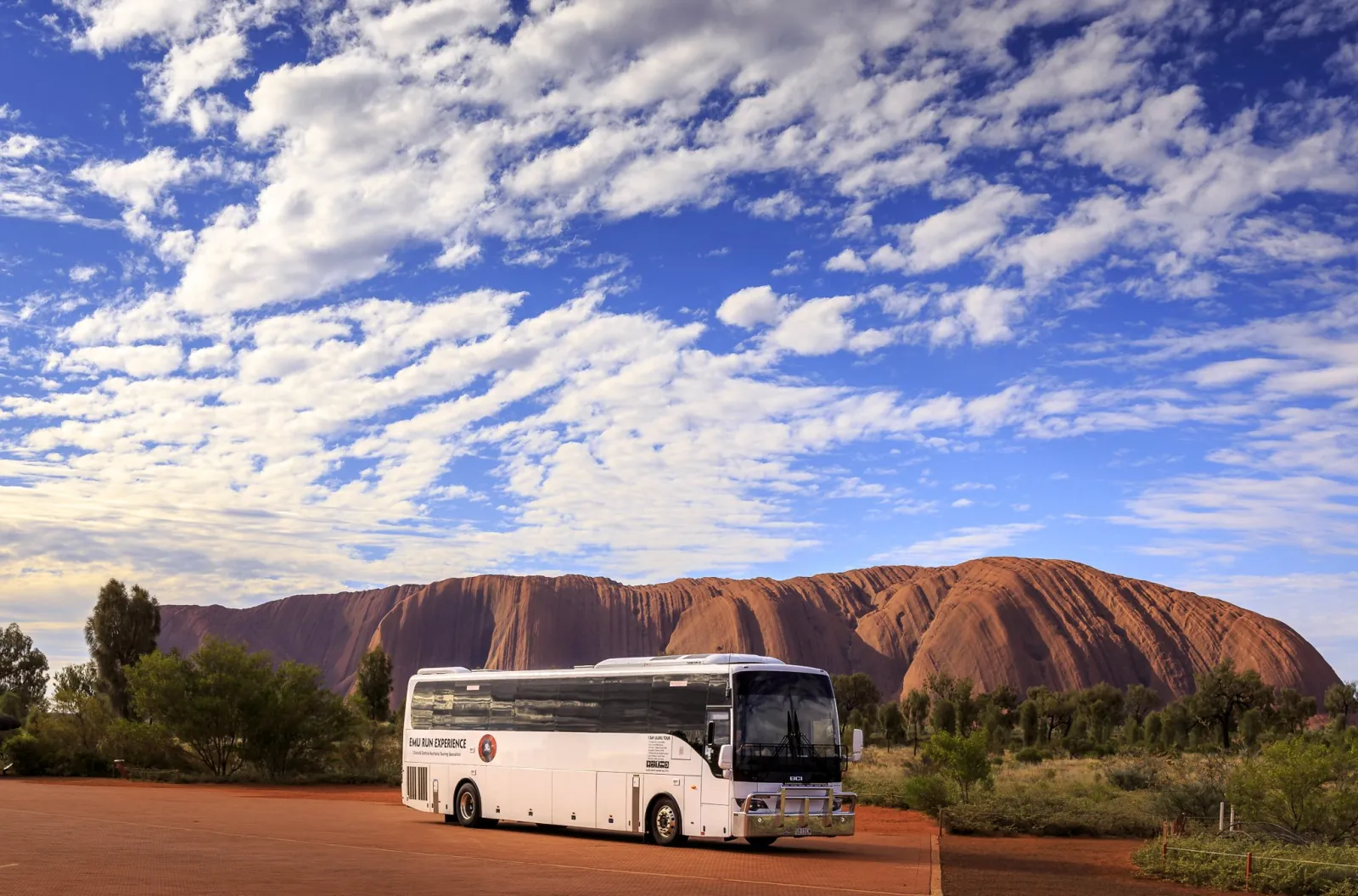
- Emu Run Experience: Alice Springs day tours to Uluru with a sunset BBQ, plus 2 and 3-day trips. The park pass is not included on day tours. The day trip with BBQ dinner is from $279, rated 4.7 from 850 reviews.
- Mulgas Adventures and Wayoutback: 3-day camping trips from Alice Springs, with park fees included. Mulgas also lists a 4-day Rock to Rock adventure from $586, rated 4.9 from 263 reviews.
Our best Uluru tours page sorts the whole field by type, and Uluru tours from Alice Springs covers the long-distance trips.
How many days do you need at Uluru?
- One day is possible but rushed. You will see Uluru, and probably not Kata Tjuta.
- Two days is the minimum we recommend: one morning for Uluru, one for Kata Tjuta.
- Three days is ideal. It matches the 3-day park pass and leaves room for the base walk, Kata Tjuta, the Cultural Centre, an evening experience and a buffer for heat or weather.
- Four days or more lets you add Kings Canyon or a multi-day walk.
Sample Uluru itineraries
The full Uluru itinerary page has more variations.
One day at Uluru
- Sunrise at Talinguru Nyakunytjaku.
- Morning: the Cultural Centre, then the ranger-guided Mala walk (or the Mala and Kuniya walks on your own).
- Midday: rest at Yulara.
- Late afternoon: Mutitjulu Waterhole, then sunset at the Uluru viewing area.
Two days at Uluru and Kata Tjuta
- Day 1: Uluru sunrise, the full base walk (finish by 11 am in warm weather), the Cultural Centre, sunset at Uluru and the Field of Light.
- Day 2: Kata Tjuta sunrise from the dune viewing area, the Valley of the Winds, an afternoon rest, then Walpa Gorge and Kata Tjuta sunset (watch the park closing time).
Three days: the full Uluru trip
- Day 1: arrive, then the Cultural Centre, the Kuniya walk and Mutitjulu Waterhole, then sunset.
- Day 2: sunrise, the ranger-guided Mala walk, a cycle or walk of the base, then Sounds of Silence or another dinner.
- Day 3: Kata Tjuta at dawn (Valley of the Winds), a helicopter flight or Walpa Gorge, then a last sunset or the Field of Light.
Practical tips for visiting Uluru
- Water: carry at least 1 litre per person for each hour of walking, and more in summer. Refill points are at the main car parks.
- Sun and heat: wear a wide-brimmed hat, sunscreen, long sleeves and sturdy shoes. Watch for heat exhaustion and low blood salt (hyponatraemia), and pack electrolytes.
- Fly net: essential in the warm months.
- Phone signal: Yulara has mobile coverage. Inside the park it is patchy (Telstra is best), with black spots around Kata Tjuta. Download maps and the official park app beforehand, and use the Emergency Call Devices along the tracks.
- Fuel: sold at Yulara. On the road from Alice Springs, fill up at Erldunda and Curtin Springs.
- Drones: prohibited throughout the park.
- Closing times: rangers enforce them, so leave the sunset viewing areas promptly.
- Wildlife and roads: keep to the speed limits and avoid night driving outside Yulara.
- Rain: if it rains, go. Waterfalls on Uluru are rare and spectacular, especially at Mutitjulu Waterhole and Kantju Gorge.
Information checked October 2026. Park conditions, prices and flight schedules change, so check Parks Australia and your operator before you travel.
Guest Reviews
What Highlights Tour Guests Say
4.7/5
from 279 verified travelers
Ratings and review counts are each platform's live figures (GetYourGuide or Viator) as of October 2026 and may shift slightly day to day.
"Wonderful tour. Got a close look at Uluru, and history explained so well by tour guide. Visited the waterhole, the caves. Thoroughly enjoyed the tour and great value"
"Max our German tour guide was very informative. His passion for this land and its culture was clearly evident and heartfelt. A wonderful experience to get so close to the rock."
"Great time. Interesting stories and history. Knowledgeable guide."
"Out of all the experiences we did on our trip, this was an our favourite! Pete the guide is an amazingly knowledgeable and respectful guide about the local indigenous people. We felt so lucky to learn from Pete who is also a great storyteller. Absolutely hands down a great experience!"
"Everything we expected and more. Max was so knowledgeable and a great communicator. Thoroughly enjoyed the tour."
"Amazing, Andrea is wonderful guide. Maybe change the breakfast, but was an incredible experience."
"Fabulous tour, our guide Matia was a lovely guy & very informative, thank you for a wonderful morning"
Read all 279 verified reviews
See All ReviewsStart Your Uluru Trip at Sunrise
A three-hour sunrise tour is an easy first morning. Buy your park pass online, then check dates for your trip. Starting from $132 per person.
Check Availability & BookCan't Make These Dates?
Browse More Available Options
Other Uluru and Kata Tjuta tours, each with its own review, price and booking link.
Visiting Uluru: Questions
Names, passes, the climb, the best way to see the rock, how many days and when to go.
Yes. Uluru is the Anangu name and Ayers Rock is the name given by the European explorer William Gosse in 1873. The landmark is officially dual-named, and Uluru is the name in common use today.
A national park pass costs A$38 per adult for three consecutive days (A$50 for an annual pass), and under-18s enter free. Flights, accommodation, tours and experiences cost extra. See the park pass and opening hours page.
No. The climb closed permanently on 26 October 2019, after a 2017 decision by the park's Board of Management, out of respect for Anangu law and for visitor safety.
For most people it is two to three nights at Ayers Rock Resort, with a hire car or a shuttle and at least one guided cultural experience, such as the free ranger-guided Mala walk. Walking the 10.6 km base walk at sunrise is the best way to see the rock up close. The best Uluru tours page compares the guided options.
Fly direct to Ayers Rock Airport. Qantas and Jetstar fly from Sydney, and Jetstar flies from Melbourne. Free resort shuttles meet scheduled flights. You can also fly to Alice Springs and drive about 5.5 hours, or join a tour. Schedules are changing, so check the airlines. See how to get to Uluru.
Plan two to three days. That gives you time for Uluru at sunrise and sunset, Kata Tjuta, the Cultural Centre and an evening experience, and it matches the 3-day park pass. The Uluru itinerary page has day-by-day plans.
May to September has the most comfortable walking weather. Summer (December to February) brings average highs near 38°C, heat-related trail closures and more flies, though it is quieter. See the best time to visit Uluru.
Yes. Operators such as Emu Run run long day tours from Alice Springs with a sunset BBQ. With about 10 hours of driving in the day, a 2 or 3-day trip is much more rewarding. See Uluru tours from Alice Springs.
Yes, for personal use you can photograph most of the park freely. Respect the signs at culturally sensitive sites where photography is not allowed, and avoid photographing the north-east face. Drones are banned.
All visitor accommodation is at Yulara (Ayers Rock Resort), about 20 minutes' drive from Uluru. It ranges from campsites to luxury hotels. Curtin Springs offers budget camping further east. See where to stay at Uluru.
Still have questions? Email us at info@ulurukatatjutatours.com
Keep Exploring
Explore More
Every Uluru and Kata Tjuta tour guide, comparison and tour review on this site.
Compare & Plan
- Uluru & Kata Tjuta Day Tours
- Uluru Sunrise Tours
- Uluru Sunset Tours
- Kata Tjuta Tours
- Uluru Base Walk Tours
- Uluru Helicopter Tours
- Uluru Field of Light Tours
- Uluru Dinner Under the Stars
- Uluru Segway Tours
- Uluru Tours from Alice Springs
- Ayers Rock Resort Tours
- Kings Canyon Tours from Uluru
- Uluru 2 and 3-Day Tours
- Best Time to Visit Uluru
- Uluru Itinerary: 1 to 3 Days
- Uluru vs Kata Tjuta
- How to Get to Uluru
- Where to Stay at Uluru
- Uluru Park Pass & Opening Hours
- Kata Tjuta Walks Compared
- The Uluru Base Walk
- Uluru Without a Car
- Things to Do in Uluru
- Uluru (Ayers Rock) Visitor Guide
- Best Uluru Tours
Tour Reviews
- 2-Day Uluru Camping Tour from Alice Springs
- 3-Day Uluru, Kata Tjuta & Kings Canyon Tour from Yulara
- 4-Day Rock to Rock Tour: Uluru, Kata Tjuta, Kings Canyon
- Aboriginal Homelands Experience near Uluru
- Alice Springs to Ayers Rock Resort Coach Transfer
- Kata Tjuta Afternoon Small-Group Tour from Yulara
- Kata Tjuta Small-Group Sunrise Tour with Picnic Breakfast
- Kings Canyon Day Trip from Ayers Rock Resort
- Uluru 1.5-Hour Sunset Tour with Sparkling Wine
- Uluru 15-Minute Helicopter Flight from Yulara
- Uluru and Kata Tjuta Helicopter Flight, 25 Minutes
- Uluru and Kata Tjuta Scenic Plane Flight, 40 Minutes
- Uluru and Kata Tjuta Sunset Helicopter Flight
- Uluru Astronomy Tour with Telescope and Photo
- Uluru Base Walk at Sunrise: Small-Group Guided Trek
- Uluru BBQ Dinner Under the Stars with Drinks
- Uluru Day Tour with Sunset BBQ from Ayers Rock Resort
- Uluru Day Trip from Alice Springs with Sunset BBQ
- Uluru Field of Light Sunrise Tour with Hot Drinks
- Uluru Highlights Small-Group Sunrise Tour with Breakfast
- Uluru Hop On Hop Off Pass: Uluru and Kata Tjuta
- Uluru Morning Guided Base Walk with AAT Kings
- Uluru Rock Blast Scenic Plane Flight, 20 Minutes
- Uluru Sacred Sites & Sunset Tour with Wine & Cheese
- Uluru Segway and Walking Tour: Mutitjulu and Mala Walk
- Uluru Small-Group Sunset Tour with Sparkling Wine
- Uluru Sunrise and Kata Tjuta Tour with Walpa Gorge
- Uluru Sunrise Guided Base Walk with Light Breakfast
- Uluru Sunrise Segway Tour Around the Full Base
- Uluru Sunset, Outback BBQ Dinner & Star Talk
- Uluru, Kata Tjuta & Kings Canyon 3-Day Camping Tour
- Valley of the Winds Guided Hike at Kata Tjuta